Random animal generator for charades: a ready-to-play round
Quick answer: Draw one animal per player, write each name on a slip, and give each actor 45 seconds to mime it while their team guesses. For a no-prep version, use the random animal generator, set the number of picks to the player count, then copy the list before anyone looks.
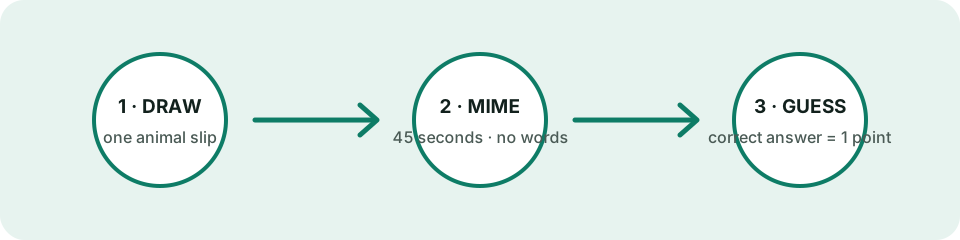
Set up the animal slips
- Count the people who will act. Generate that many animals, or use a shorter list if players will take a second turn.
- Copy the list onto separate slips and fold them so the names cannot be read from the outside. Keep one spare blank slip for a reroll.
- Split into two teams. Put the slips in one bowl and choose which team acts first.
For a group that does not want teams, take turns in a circle and let everyone guess. The same draw works either way; only the scoring changes.
Use one clear turn rule
The actor takes one slip and has 45 seconds to show the animal without speaking, spelling, or pointing at an object that gives its name away. Their team can make as many guesses as it likes. A correct guess earns one point; if time runs out, put the slip aside and move to the next actor.
After every person has acted once, return the slips to the bowl for another round. Reusing the list keeps setup short, while drawing a fresh list makes the next round less predictable. Decide which version you want before play begins.
Make the animal list fit the room
- Younger players: use a familiar pool and allow one pass per person. A passed slip goes back in the bowl, and the actor draws a replacement.
- Older players: keep the full pool, shorten the timer to 30 seconds, and let the actor mime only the animal's movement rather than its shape.
- Mixed ages: let the youngest player on each team choose whether a slip can be passed. That gives the room one shared rule without asking the facilitator to rebalance every draw.
- Quiet group: replace the timer with a fixed number of guesses, such as five. The actor still uses gestures only, but no one has to race a clock.
Handle the awkward slips before they cause a pause
Some animal names are unfamiliar, hard to act out, or easy to confuse with another one. Set a simple house rule before the first draw: an actor may exchange one slip, but the exchanged slip stays out until the round ends. This avoids repeat draws and keeps the exchange from turning into a debate over whether an animal is difficult enough.
If a name itself is unfamiliar, the facilitator can quietly read it to the actor. The actor still has to mime the animal; the clue is only there so the game tests acting rather than pronunciation.
A compact score sheet
Use one row per round and two columns for team points. Mark a point only after a correct guess; leave the row blank when time expires. At the end, total the marks rather than replaying disputed turns. For a cooperative version, skip points and see whether the whole group can finish all the slips before a shared five-minute timer ends.
This format is easy to repeat because the list, timer, and pass rule are decided in advance. Generate another set when the bowl is empty, or use a custom animal list if the group wants to limit the choices to animals it has already studied.